
Miami County Recent Arrest Sources
Start at Miami Valley Jails. The page is called “Persons Currently In Custody,” names Miami County Jail as a provider, and says it refreshes every 30 minutes. That refresh is not a booking feed. It reports who is held right now. A person still moving through intake may not show up yet, and someone booked and released the same day can vanish before you look again. Miami County runs no countywide sheriff feed of today's bookings and keeps no weekly arrest archive. Piqua posts dated incident logs with arrest summaries, though those city papers track different events and different fields than the jail roster does.
| View | Actual window | Best use | Photo status |
|---|---|---|---|
| Arrests Last 24 Hours | Current custody, with an advertised 30-minute refresh | Check whether a recent arrestee is held now | Not promised on the search screen |
| Police Blotter | Multi-day city logs, court records, and reports | Reconstruct an event after roster removal | City logs are not photo galleries |
| VINELink Custody Check | Participating custody events | Status checks and available alerts | Not a mugshot source |
Arrested Last Night in Miami County
Pull up the live roster and pick Miami County Jail. Give intake time to finish. Booking runs around the clock, per the county's 2025 assessment. It covers prints, a photo, property, classification, and holding. The arrest time, the booking time, and the moment a name posts online rarely match. A 7:00 to 8:00 a.m. arrival pattern reflects operations, not a posting cutoff.
When the roster shows nothing, call inmate information at 937-440-3961 or the arresting agency. Fast releases often slip past a current-custody list. The same-day arrest path handles that gap, and VINELink custody alerts can flag a matching participating record.
Search the Miami County Jail Roster
The regional roster tracks current custody at Miami County Jail and may note the minimum-security Miami County Incarceration Facility too. History is not its job. You get surname and given-name search fields. A jail selector and A-to-Z name browsing appear on the landing screen too. The Sheriff sets no published window for how long released entries stay up.
| Search field | Use |
|---|---|
| Last Name | Start with the exact surname. |
| First Name | Separate people who share a surname. |
| Jail | Select Miami County Jail. |
| A-Z | Browse when spelling is uncertain. |
- Open the official roster and choose Miami County Jail.
- Search the surname, then narrow with the first name.
- Compare identity, facility, booking, charge, and bond fields. A name alone is not identity proof.
- For a missing or released entry, contact Sheriff Records and check the court docket.
No blanket booking-photo rule appears on the official screen. Check the person's result for a photo, or ask Sheriff Records directly. The county offers no jail app. Ohio VINE stands apart and skips some bookings. The official Miami Valley Jails screen displays the search controls.
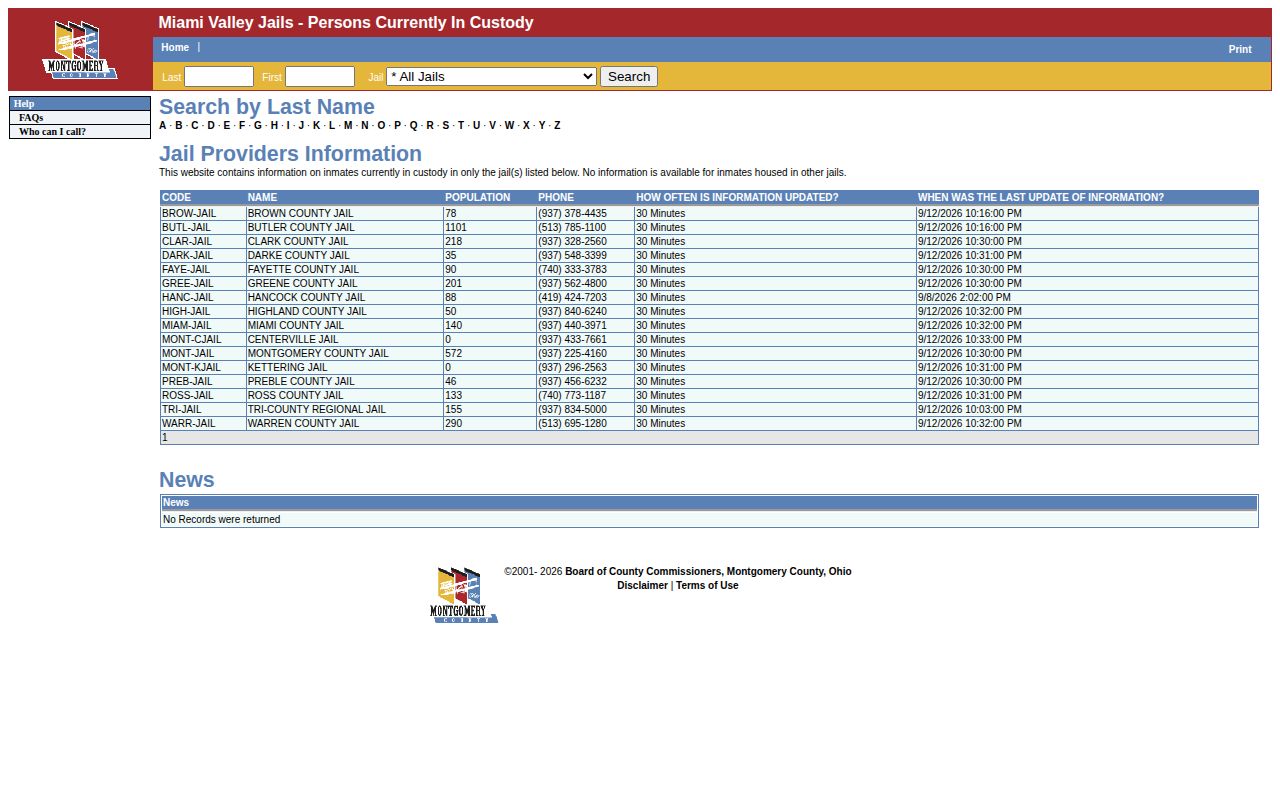
This interface is not a list of everyone arrested during a fixed day.
Where Miami County Arrests Appear
No single source follows a Miami County arrest from start to finish. Officials split live custody, police incidents, and court cases into separate records, news picks only notable events, and aggregator sites can sit stale, duplicate names, or match the wrong person.
| Channel | Status | What it answers |
|---|---|---|
| Miami Valley Jails | Official | Current county custody |
| City police records | Official | Incident and agency report |
| County courts | Official selected view | Case events and disposition path |
| RecentlyBooked, Mugshots.zone, Busted Newspaper | Unofficial | Private county archives; verify each fact |
| WHIO, Dayton Daily News, Troy Tribune | News | Selected public-safety stories |
RecentlyBooked’s Miami County view illustrates an unofficial 30-day presentation.
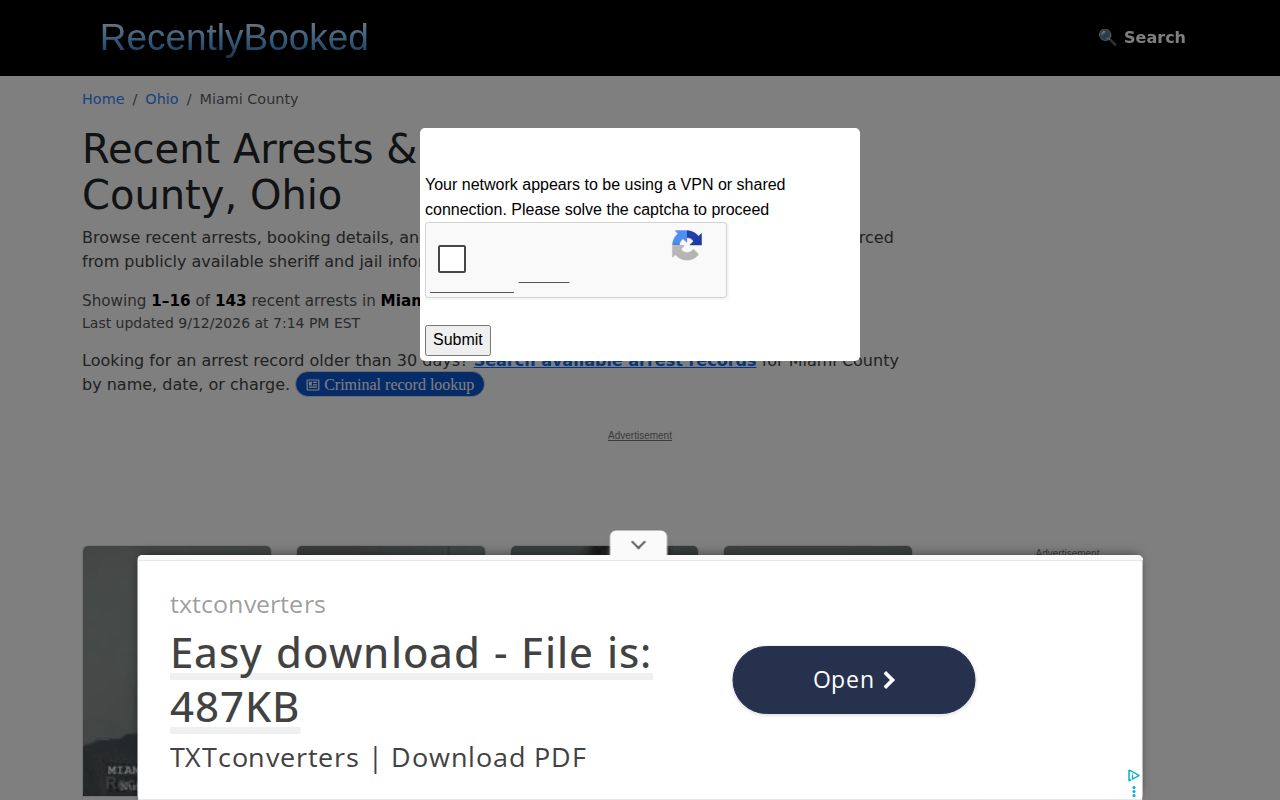
Check its dates and images with the Sheriff, police, and court.
Miami County Recent Arrests by City
Troy Recent Arrests walks from Troy Police records to county custody and the court docket. Piqua Recent Arrests breaks down the city's dated logs and arrest summaries. Tipp City Recent Arrests leans on the police records framework. The city posts no booking feed of its own. Anyone held by the county shows up through Miami Valley Jails. City police keep their own incident reports.
A Piqua log can list incidents with no jail booking attached. Troy reports stay requestable after custody ends. Tipp City video follows its own fee policy, separate from a routine booking-photo ask. One roster never replaces these city records.
Inside a Miami County Arrest Record
Intake produces the booking record. The arresting agency writes the incident report. The court keeps the docket. Keeping the three straight stops a custody snapshot from being read as a case outcome.
| Field | Meaning |
|---|---|
| Name and identifiers | Data entered at booking; check spelling and duplicate names. |
| Arrest and booking times | Distinct events that may be hours apart. |
| Booking number | A local transaction identifier. |
| Agency and facility | Who made the arrest and where custody is held. |
| Charge | An charge, not guilt. |
| Bond | An initial amount, type, or condition subject to court change. |
| Court and case | The route to filings and disposition. |
| Release | Date, time, or reason if recorded. |
Miami County Mugshots After Arrest
A Miami County arrest gets photographed at booking, yet that shot does not always reach the web. Sheriff Records can tell you if a releasable copy exists and what a copy costs. Some photos stay withheld. Exemptions cover juveniles, sealed records, victim protection, and open investigations. The sheriff posts no mugshot gallery.
After a conviction and state prison term, the Ohio Department of Rehabilitation and Correction search can show a state profile photo. That tool tracks prison inmates, though. It is not a source for new Miami County arrests. Private mugshot sites sometimes linger after a person's release, so treat them as leads only.
Request Miami County Arrest Records
Sheriff Records takes requests on weekdays, minus legal holidays. Include a full name, a rough date, the agency, and the record type. Ohio law usually demands no special form or stated purpose. Contact details just make delivery and clarification easier.
- Check custody and court records, noting exact names and dates.
- Ask for the specific booking record, jail log, release record, report, or photo.
- Use the Sheriff for jail records and the city police for its incident report.
- Pay a quoted copy or media cost and ask for the legal basis of any denial.
- Verify the record against the final court disposition.
Paper copies run $0.05 single-sided or $0.10 double-sided, prepaid. Digital records under 20 pages are free. Longer digital productions bill by the page. Photo and video pricing varies with each request. The county publishes no fixed completion deadline. No photo-retention period is set either. The official records page carries current hours, channels, and fees.
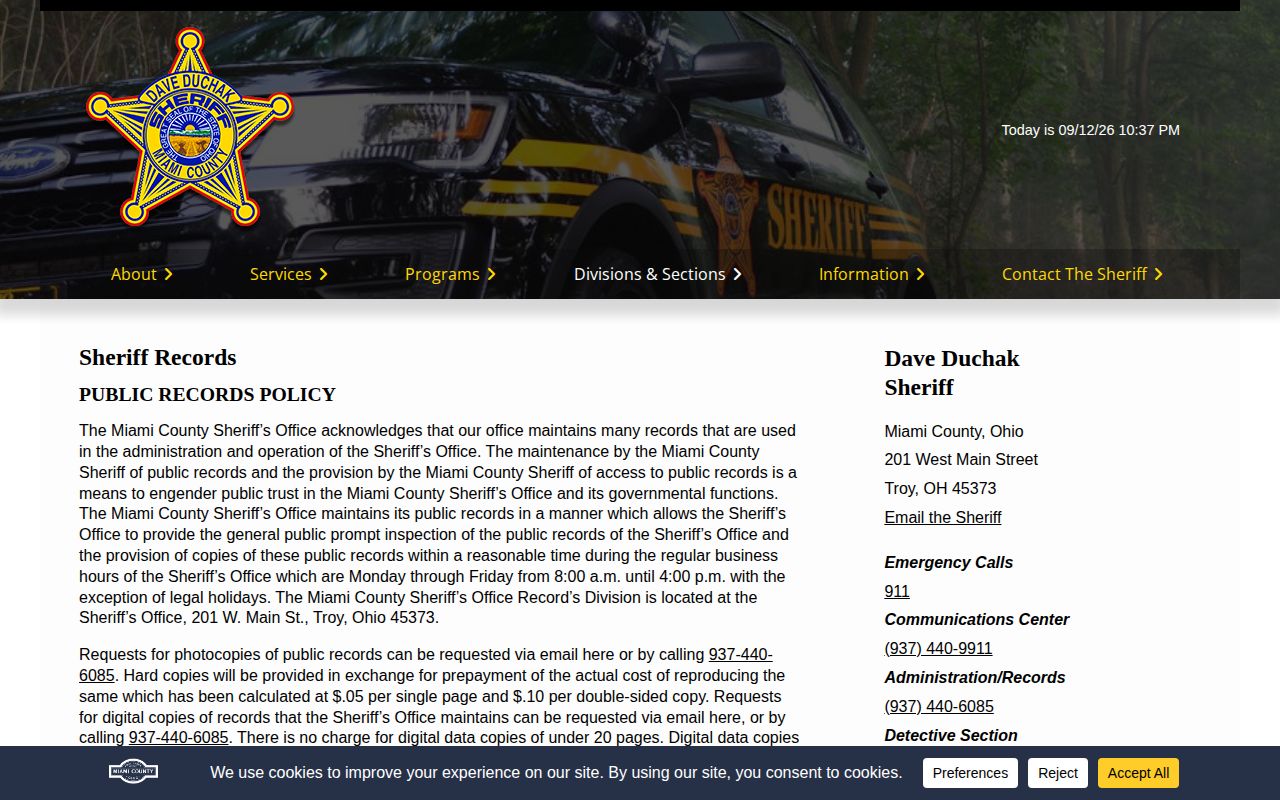
Confirm those terms before sending a request or payment.
Ohio Arrest Records and Removal Law
ORC § 149.43 sets Ohio's public-record baseline and its exemptions. Public access does not mean online posting. Juvenile files, sealed cases, victim details, and confidential investigative material can all be restricted. Miami County follows an RC-2 retention schedule rather than one fixed period. For older material, ask Sheriff Records first. The Clerk comes next.
A separate law targets paid removal. ORC § 2927.22 bars charging people to remove, correct, modify, or withhold defined criminal-record information. The statute does not erase a record. If you qualify, file county sealing and expungement forms, then deliver the order to the agency or publisher. Never pay a site to suppress a booking photo. RecentlyBooked and Mugshots.com describe free correction processes for qualifying court outcomes, though those are publisher policies, not county guarantees. Google's outdated-content tool refreshes a result only after its source changes. The Ohio statute shows the anti-pay-to-remove rule in full.
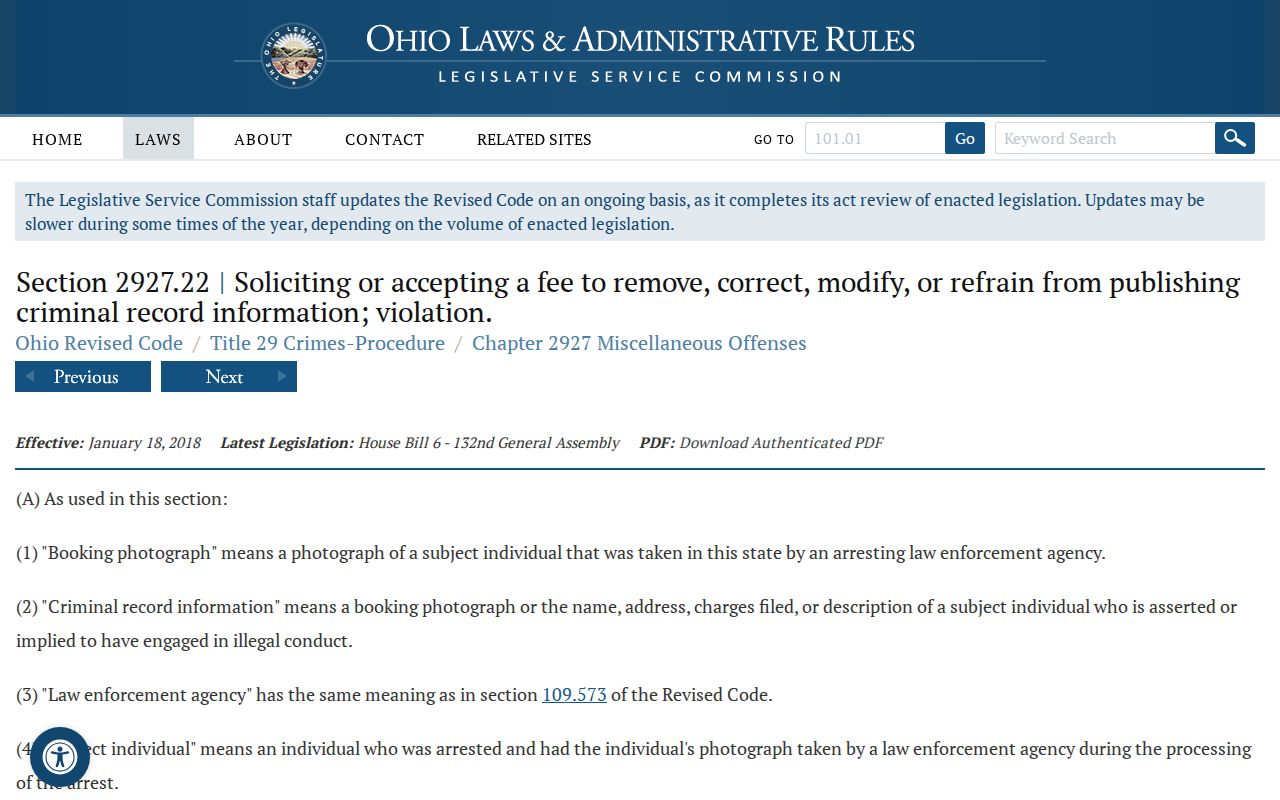
Read it with the record facts and any court order.
Miami County Arrest Warrants
No most-wanted photo list appears on the sheriff's site. There is no public warrant portal either. The Clerk holds warrant-issuing authority, and Local Rule 10.05 spells out Sheriff and Clerk notice after an apprehension on certain warrants.
For status, contact the Clerk, Sheriff, arresting agency, or counsel, since online case data cannot prove a warrant active or cleared. Never approach a wanted person. Send tips to law enforcement, call 911 in an emergency, and use the Clerk page for court and writ authority.
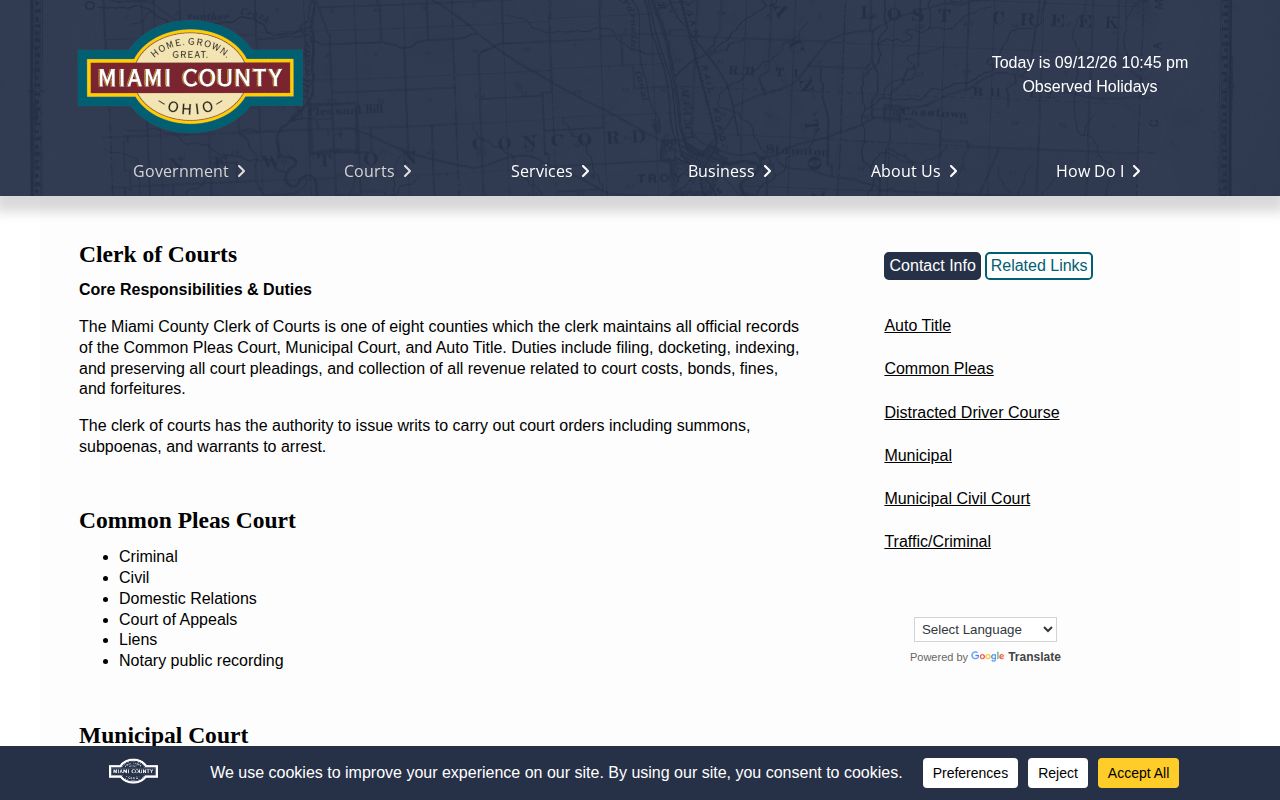
The capture is not a wanted-person list; an agency must confirm live status.
After a Miami County Arrest
Arraignment comes first. Charges and release terms are addressed there. The jail assessment describes weekday video arraignments, afternoon video court, and Sunday bond hearings, though those patterns are not a promise for one case. Release timing varies by day and hour.
Use court public access for orientation. The Clerk verifies, because Miami County treats its maintained physical record as official while the online view is only selected data. A dismissal, plea, acquittal, conviction, or diversion matters more than the booked charge.
Beyond Miami County Jail Custody
A prison sentence leaves the county roster. ODRC then tracks the state sentence, supervision terms, and profile photo. Federal custody works differently. The BOP locator covers federal inmates from 1982 forward but shows no photos, while the ICE locator covers qualifying immigration custody and no gallery either. Each system answers a different question. Confirm uncertain transfers with the sending facility and the receiving system, since a match in one proves nothing about another.
Miami County Booking Time Gaps
Intake at the Miami County jail is a sequence, not one timestamp. Staff receive the person and confirm identity. They log property, take fingerprints, and photograph. Housing and medical needs get assessed too. A hold, detox need, transport delay, or identity question can stretch the process. The roster's advertised 30-minute refresh only matters after data reaches the public system, so a sound official search can return no match soon after an arrest.
The reverse also happens. Release or transfer can drop a name from current custody while a police report, booking record, docket, or private archive remains. Note the time and source of each search. That habit makes later changes easier to explain.
When Miami County Releases Occur
Miami County's official 2025 assessment studied 2023 releases. Most fell between roughly 7:00 a.m. and 4:00 p.m. Monday led with 22.2% of releases, and Saturday sat at just 2.1%. Friday drew 17.7% of admissions and Sunday 10.6%, numbers that describe system activity rather than any named person's schedule.
An individual release still depends on bond approval, a court order, paperwork, transport, and facility processing. Call the facility for current custody instead of predicting from a pattern.
Three Miami County Police Patterns
Police publication in Miami County is fragmented city by city. Piqua posts dated public-information logs and arrest summaries in its Document Center. Those PDFs can carry report number, event nature, location, time, narrative, and booking-number fields. Still, these PDFs are not a county booking feed. Nor are they a mugshot gallery. Troy offers a structured police-records request route. It also gets periodic secondary blotter coverage through My County Link. Tipp City has a formal public-record policy and video-request process. It lists no official booking log.
The city pages are not interchangeable. Start with the arresting agency, and use the county roster only for the current-custody question. A news story or calls-for-service entry adds context. It replaces neither official record of the arrest.
Miami County Court Search Limits
The court calls its online information a convenience view of selected records. Documents can be missing, unavailable, or restricted. The official record sits with the Clerk at 201 W. Main Street. That warning matters when a booking charge and the later case seem mismatched.
Search with a full name. Compare case number, court division, filing dates, and charge history. Municipal Court handles most misdemeanors and traffic. Felonies move through Common Pleas. Ask the Clerk when results stay ambiguous, since a silent search is not proof of dismissal.
Why an Arrest Record May Be Missing
Gaps in a record usually have a lawful explanation. Intake can delay a listing. A person released before the roster updates may never appear. So can someone held in a different system. Juvenile protection, a sealing order, a victim-information rule, or a confidential law-enforcement exemption may also block public access. The public-record statute simply does not require every record to be posted on a website.
- Current custody
- A live jail status that can end on release or transfer.
- Sealed record
- A court-controlled record with access restricted under Ohio law.
- Disposition
- The court’s outcome, which can differ from the booked charge.
- Retention schedule
- The approved timetable governing how an office keeps or disposes of records.
Older state-institution material lives elsewhere. The Ohio History Connection offers archive and incarceration-index paths for that history, but none of it adds up to a modern Miami County arrest feed.
Warrant Arrests Enter County Custody
A warrant often predates the booking that shows up on the roster. The Clerk issues the writ. An agency serves it. Jail intake then opens the new custody event. Miami County Local Rule 10.05 spells out the written notice step. That applies after the Sheriff apprehends someone on a bench warrant. It also covers a warrant served later than expected. That chain is why an arrest date may not match the underlying complaint. Only the responsible court or agency can confirm a warrant's current status. The county publishes no complete most-wanted photo roster. No private warrant label should be treated as current confirmation.
Miami County’s Two-Jail History
Old facility names still trip up present-day searches. The downtown Miami County Jail operates as the full-service site inside the Safety Building. The Miami County Incarceration Facility on North County Road 25A is a separate, minimum-security location. County history traces the current setup through an older city jail and a 1972 building. Federal overcrowding litigation came next. Then came MCIF construction in 1999, its recession-era closure in 2009, and reopening in 2013. References to the old Piqua jail or earlier facilities describe nothing modern. Always check the facility field on the current record. Use the correct control number too. Both steps matter before making plans tied to a person in custody.
Miami County Sheriff’s Office Location and Directions
Public Record Search
Sponsored Results